
The Vineyards is one of Naples’ most established residential communities, with mature landscaping along Vineyards Boulevard and a housing stock that ranges from newer construction to homes that have been in place for two decades or more. In a community where comfort standards are high and the subtropical climate demands year-round cooling, a reliable air conditioning system is essential. Yet frequent AC repairs are a reality for many Vineyards homeowners, and in most cases the underlying causes are identifiable and preventable. Understanding what drives these problems is the first step toward protecting your system and avoiding the costs and disruptions that come with repeated service calls.
The Impact of Neglecting Regular Maintenance
Routine professional maintenance is the single most effective measure a Vineyards homeowner can take to reduce the frequency of AC repairs. When a system goes season after season without a professional tune-up, small conditions that would be caught and corrected early are allowed to develop into component failures that require significant repair or replacement. Dust and debris accumulation inside the air handler, coil fouling, refrigerant level drift, and worn electrical connections all fall into this category.
In our service calls throughout the Vineyards, systems that have been consistently maintained on a semi-annual schedule perform noticeably better and generate far fewer emergency repair calls than those where maintenance has been deferred. The cost of two professional AC maintenance visits per year is a fraction of what a single compressor failure or evaporator coil replacement typically runs, making routine service one of the highest-return investments available to homeowners who depend on their cooling systems year-round.
The Hidden Dangers of Clogged Air Filters
Air filters are the most basic and most frequently neglected component of residential HVAC care. A clean filter allows air to move freely through the system, supporting efficient operation and protecting internal components from particulate contamination. A clogged filter does the opposite, restricting airflow and forcing the system to work harder to move conditioned air through the home. The consequences compound quickly in Florida’s climate.
Reduced airflow leads to uneven cooling, longer run cycles, higher energy consumption, and elevated operating temperatures inside the air handler. When the system runs hot for extended periods, components including the compressor and blower motor experience accelerated wear that shortens their operational lifespan. Ice formation on the evaporator coil is a common downstream effect of restricted airflow and can cause water damage to surrounding components when it melts. Checking and replacing filters every one to three months is the simplest preventive measure available and one of the most consequential for long-term system health.
Identifying and Addressing Refrigerant Leaks
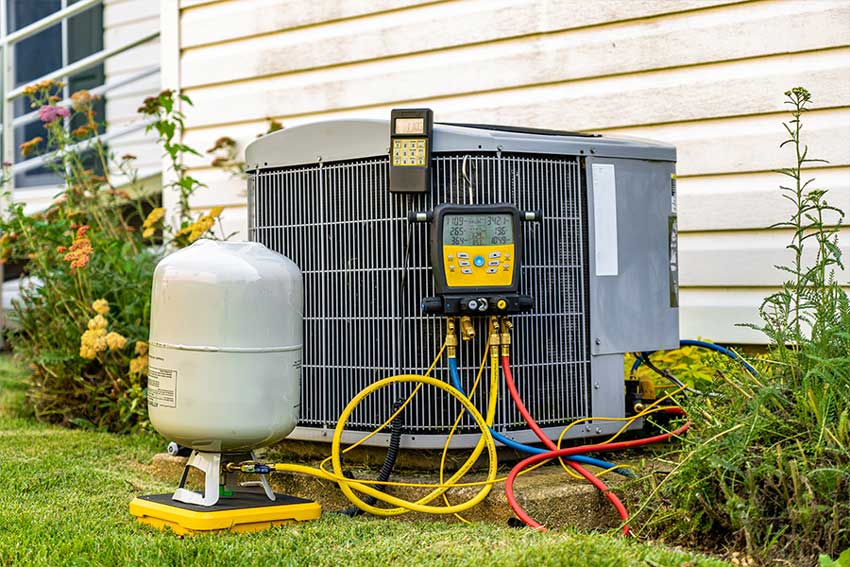
Refrigerant is not consumed by normal AC operation. A system that is losing refrigerant has a leak, and that leak will not resolve without professional intervention. In Vineyards homes, refrigerant leaks most commonly develop at coil connections, valve fittings, or along copper line sets that have experienced vibration stress or corrosion over time. The symptoms include gradual loss of cooling effectiveness, longer run cycles without achieving the set temperature, hissing sounds from the unit, and ice formation on the evaporator coil.
Attempting to address cooling performance by simply recharging refrigerant without locating and repairing the leak is a temporary measure that delays the inevitable while adding unnecessary cost. Professional diagnosis identifies the leak location precisely, allows for proper repair, and ensures the system is recharged to the correct specification before being returned to service. Left unaddressed, refrigerant leaks cause compressor damage that frequently results in full system replacement rather than a straightforward repair.
Thermostat Malfunctions and Inaccurate Temperature Control
The thermostat serves as the control center for the entire HVAC system, and when it is malfunctioning, the consequences ripple through every aspect of system performance. A thermostat reading temperatures inaccurately will signal the system to run longer or shorter cycles than conditions warrant, resulting in a home that never reaches the desired comfort level and a system experiencing unnecessary operational stress.
Placement is one of the most common and easily overlooked factors affecting thermostat accuracy. A thermostat positioned near a heat-generating lamp, in direct sunlight, or adjacent to a supply vent will read conditions unrepresentative of the home’s actual temperature. Dust accumulation, aging sensors, and wiring issues can also produce inaccurate readings. When basic corrective steps do not resolve the discrepancy between thermostat settings and actual home comfort, professional evaluation is the appropriate next step to prevent continued system strain and rising energy costs.
Electrical Issues Leading to AC Repairs
Electrical problems are among the most serious causes of AC system failures because they can develop quickly and produce consequences that extend beyond the HVAC system itself. Faulty wiring, loose connections, failing capacitors, blown fuses, and tripped circuit breakers are all common electrical issues that affect AC systems in Vineyards homes, particularly in systems that have accumulated significant operating hours.
The challenge with electrical issues is that their outward symptoms, including inconsistent cooling, system shutdowns, or complete failure to start, are often identical to symptoms produced by other causes. Accurate diagnosis requires professional evaluation with appropriate test equipment. Regular professional maintenance includes electrical connection inspection and capacitor testing that catches developing issues before they produce a system failure, which is one of the key reasons consistent maintenance scheduling translates directly to fewer emergency repair calls.
When to Consider Replacing Your AC Unit and How Poor Installation Creates Problems
Even with excellent maintenance, every AC system has a finite operational lifespan. For Vineyards homeowners, the replacement threshold is generally reached when a system is more than twelve to fifteen years old, requires repairs more than once per year, or presents a repair cost approaching fifty percent of the cost of a comparable new system. Rising energy bills that cannot be explained by usage changes are another reliable indicator that a system’s efficiency has degraded beyond what maintenance can restore. Our team can evaluate the specific condition of an existing system and provide honest guidance on whether repair or AC installation and replacement represents the better long-term investment.
Installation quality also has consequences that extend across the entire life of a system. A unit improperly sized for the home’s actual load requirements will either short cycle or run continuously, neither of which represents efficient or sustainable operation. Incorrect ductwork connections, improper refrigerant charge at installation, and faulty electrical work create baseline performance problems that no amount of maintenance can fully correct. Selecting a licensed, experienced installation contractor from the outset is one of the most impactful decisions a Vineyards homeowner can make when replacing their system.
Keeping Your Vineyards Home Cool and Repair-Free
The causes of frequent AC repairs discussed here share a common thread: most are preventable with the right combination of professional maintenance, timely attention to early warning signs, and quality installation from the outset. Vineyards homeowners who approach their HVAC systems proactively rather than reactively consistently experience fewer disruptions, lower long-term costs, and more reliable comfort throughout Florida’s demanding cooling season.
If your system has been generating frequent repair calls or has not received professional maintenance recently, contact our team today to schedule a comprehensive assessment and get your AC back to peak performance.